
Our Future Development Strategy (FDS) is a 30-year planning tool that identifies where future housing growth could occur across the region. It highlights areas with potential to support more homes and the infrastructures needed to enable growth.
The strategy identifies future growth areas and supports housing intensification in the city centre and surrounding areas.
The strategy and implementation plan
No results found for ""
How the FDS will be implemented
Implementing the FDS will require updates to plans, policies and strategies, primarily through processes under the Resource Management Act. The implementation plan is outlined above.
Changes needed to support the strategy, such as zoning changes, will follow statutory processes and include community consultation.
Background to the development of the FDS
All councils are required to plan for future urban growth in a way that achieves well-functioning urban environments in both existing and future urban areas. The plan also makes sure there's sufficient development capacity available over the next 30 years to meet expected demand.
Tairāwhiti needs more homes to house our whanau now and in the future. Planned growth can bring opportunities, prosperity, and long-term benefits to the community and our environment.
We will need nearly 30% more homes over the next 30 years - that's just over 5,000 new homes. Almost half of Tairāwhiti's population doesn't earn enough money to buy or rent a home. It is important to plan for homes. Without enough supply, prices can be affected, our young people, family and workers may be driven away. If managed well, growth can benefit the entire community.
Enabling housing growth and intensification to occur in the right places can help bring housing costs down and create well connected communities.
The FDS focusses on the existing urban area and immediate surrounds of Gisborne City. Most growth is predicted to happen in the urban areas - City Centre, Elgin, Te Hapara, Mangapapa, Whataupoko and Kaiti.
The city is where most of the future growth is predicted to happen with some growth in nearby rural areas such as Manutūkē, Pātūtahi and Ormond East.
We considered the current ability of our coastal and rural townships to provide for the forecast growth in their areas and there is currently enough zoned land in the current operative RMA plan to meet expected modest levels of growth.
All these homes are not all needed immediately; it’s spread out over 30 years. Much can change during this period. We will monitor actual rates of home and population growth and housing demand and this will inform review of the FDS when needed.
The form development will take
To minimise urban sprawl and protect productive land, the FDS focuses on building up within existing urban areas, with a smaller amount of growth around the edges of the city.
Building up (known as intensification) is expected to provide around 75% of the additional homes needed across the region.
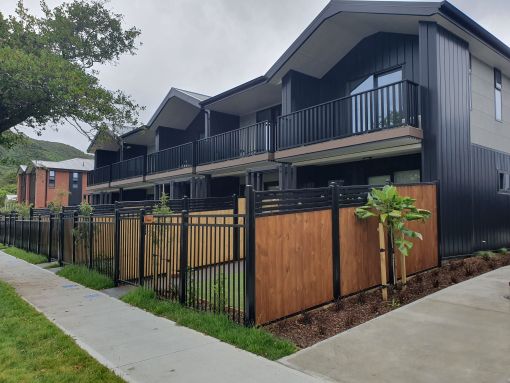
This includes a range of housing types, from infill housing on existing sites to townhouses, terraced housing and multi-unit developments in suitable locations, particularly near transport routes, neighbourhood centres and the city centre. A Residential Design Guide will be developed to ensure quality urban design.
Building out (urban expansion) is expected to provide around 25% of new homes. This includes carefully planned growth areas on the outskirts of the city, offering a mix of housing options, including larger lifestyle properties in appropriate locations.
The community as identified compact, sustainable urban growth as a priority through the Spatial Plan and Urban Development strategy. Focusing growth within and around existing urban areas helps maximise access to services, reduce infrastructure costs and support efficient transport networks.
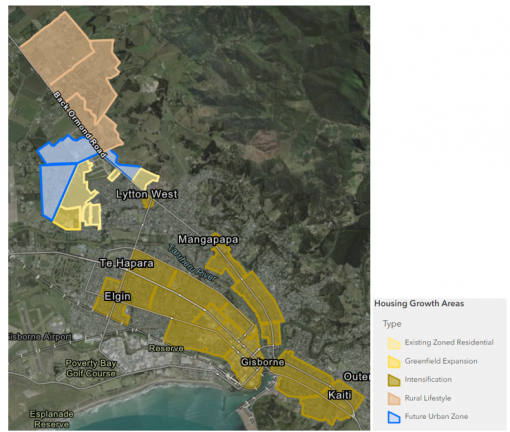
Allowing modest expansion on the outskirts of our city provides choice, while maximising access to services like shops and cafes and minimising the infrastructure costs and commuting pressures. The FDS avoids expansion into rural flood prone areas, parks and reserves and productive land. Public transport is feasible when there are enough people to support it and the FDS was developed in line with our Transport Planning.
The FDS took 2 years to develop from January 2022 to March 2024. Representatives from various sectors were involved including government agencies, iwi, developers, infrastructure providers, service providers, industry groups, large employers in the Tairāwhiti region and council-controlled organisations.
During early engagement and formal consultation, the majority supported intensification especially within the city centre for mixed-use, walkable, high-density developments. However, the capacity of infrastructure was flagged as the most pressing constraint to development as it is insufficient in some areas for intensification.
Housing affordability was also raised as a key constraint for whanau in the region.
There was general agreement on protecting productive agricultural land and focusing development within existing urban areas. Natural hazards like flooding, sea-level rise, and earthquakes were recognised as constraints, with hazard-prone areas were flagged as no-go areas.